
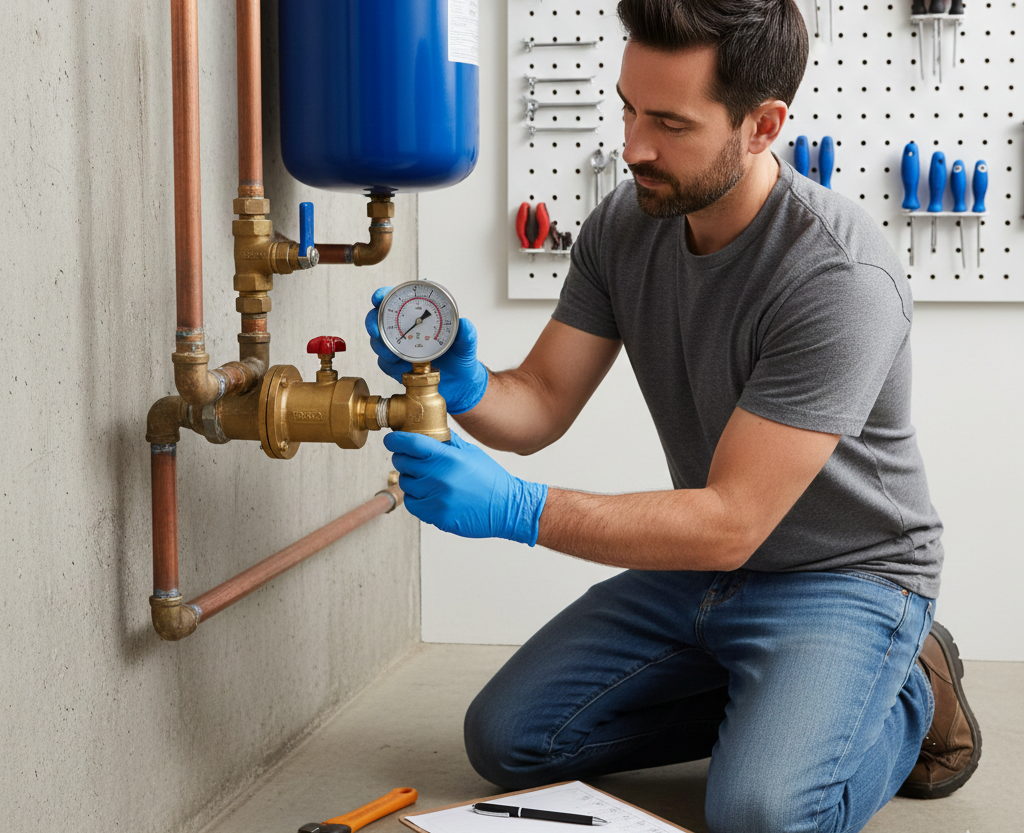
High water stress may sense excellent at some stage in a bath, but it can be a silent killer in your pipes and appliances. Most municipal water structures pump water at very high speeds to make certain it reaches every home and fireplace hydrant in the region. To protect your indoor plumbing, your home relies on a water pressure regulator. This tool acts as a guardian, slowing down the flow to a secure stage earlier than it enters your partitions. Without this small piece of hardware, your taps could leak, your water heater should fail, and your pipes would possibly in the end burst.
This article specializes in bodily plumbing hardware, domestic infrastructure management, and diagnostic protection. Please note that calltheplumb.Com gives academic information and does not host software program or offer direct plumbing offerings. This content material is for informational purposes that will help you manage your private home plumbing device safely and effectively.
What is a Water Pressure Regulator
A strain lowering valve, generally referred to as a regulator, is a bell-fashioned brass becoming. You will usually find it close to the main water close-off valve in which the water line enters your house. Its primary job is to take high-strain water from the metropolis and “alter” it to a decrease, more secure strain.
Most residential systems are designed to deal with strain between forty and 60 kilos in keeping with rectangular inch (PSI). The city regularly sends water at over one hundred PSI. The regulator makes use of a spring and a rubber diaphragm to resist the incoming force. As water flows in, the spring compresses or expands to maintain a steady output. It is a mechanical supervisor that works 24 hours an afternoon to hold your property safe.
Why Your Home Needs One
Modern appliances like dishwashers, garments washers, and ice makers have delicate plastic valves. If the strain is simply too excessive, these valves can snap or fail to close. This results in flooding. Furthermore, high strain causes “water hammer,” that is the loud banging sound you listen when you switch off a tap. This vibration can loosen pipe joints over time.
How to Tell if Your Regulator is Failing
Like any mechanical device with moving elements, those valves eventually put on out. The rubber diaphragm can crack, or the inner spring can lose its anxiety. Managing your own home includes keeping a watch out for those pink flags. For greater hints on family infrastructure, go to calltheplumb.Com.
Fluctuating Water Pressure
If your bathe starts sturdy but all at once turns into a weak trickle when someone flushes a lavatory, your regulator is probably struggling to adjust. Conversely, if the water “blasts” out of the tap when you first turn it on, the valve is probably caught open.
Leaking Faucets or Toilets
High stress forces water beyond the seals on your faucets and the flapper on your toilet. If you have got more than one taps dripping at the same time, it’s miles rarely a trouble with the taps themselves. It is often a signal that the pressure within the whole house is simply too excessive.
Banging Pipes
If your pipes rattle or shake when a valve closes, the regulator is no longer absorbing the shock of the incoming water. This places huge pressure on your plumbing joints and might lead to hidden leaks behind your partitions.
Comparison of Pressure Management Tools
| Feature | Standard Regulator | High-Flow Regulator | Pressure Gauge |
| Primary Goal | Reduce city pressure | Maintain volume in large homes | Monitor PSI levels |
| Material | Brass and Rubber | Heavy-duty Brass | Stainless Steel/Glass |
| Installation | Main Water Line | Main Water Line | Any Hose Bib |
| Maintenance | Replace every 5-10 years | Replace every 10-15 years | Periodic calibration |
| Skill Level | Professional | Professional | Beginner |
Testing Your Water Pressure Regulator
You do no longer need to be a expert to test the repute of your system. You can control this diagnostic assignment with a simple device known as a stress gauge. These are to be had at any hardware keep for an extremely low price.
Step 1: Connect the Gauge
Find an outdoor faucet (hose bib) or the laundry sink tap. Screw the pressure gauge onto the threads similar to a lawn hose. Ensure the connection is tight so it does not leak in the course of the test.
Step 2: Clear the Lines
Make sure no water is running anywhere else in the house. This includes dishwashers, sprinklers, and washing machines. You want to degree the “static” pressure, which is the stress whilst the water continues to be.
Step 3: Read the Dial
Turn the faucet on all of the manner. Look at the needle at the gauge. If the analyzing is between 40 and 60 PSI, your water stress regulator is operating flawlessly. If the studying is above eighty PSI, your regulator has failed and needs to be replaced at once to shield your private home.
Pros and Cons of Maintaining Low Pressure
| Pros | Cons |
| Appliance Longevity: Valves and seals last much longer. | Shower Experience: Some users prefer high-velocity water. |
| Water Savings: Lower pressure means less water wasted per minute. | Fill Times: Tubs and washing machines fill slightly slower. |
| Pipe Safety: Reduces the risk of “water hammer” and bursts. | Irrigation: Sprinklers may have a shorter spray distance. |
| Quiet Plumbing: Reduces the noise of water rushing through pipes. | Multi-use: Pressure may drop when multiple taps are open. |
Best Practices for Pressure Management
Good domestic management entails checking your stress as a minimum once a yr. Visit calltheplumb.Com for more guides on preventive preservation.
Always check for leaks once you regulate your regulator. If you increase the strain, it would display susceptible spots on your vintage pipes that have been maintaining consistent at lower tiers. It is also clever to encompass a stress check in your seasonal plumbing preservation tick list. Temperature adjustments within the winter can every now and then affect the flexibility of the rubber diaphragm within the valve.
If you’re acting a water heater inspection, the stress regulator ought to be your first test. High pressure is the main motive of water heater tank failure. The constant expansion and contraction of the tank underneath high PSI will finally cause the internal glass lining to crack.
When you do your weekly garbage disposal care, concentrate for the sound of the water hitting the sink. If it sounds plenty louder or greater violent than standard, seize your strain gauge. Similarly, if you have to test rest room leak problems regularly, the basis purpose might be excessive strain pushing water beyond the fill valve.
Knowing a way to use a plunger or the use of a drain snake is crucial for clogs, however those equipment won’t assist if your regulator fails. If you locate that your stress is just too low, you may attempt to modify the screw on pinnacle of the bell-shaped valve. Turning the screw clockwise usually increases the pressure. However, if the screw is rusted or doesn’t exchange the gauge analyzing, the inner spring is in all likelihood broken.
Common Mistakes and Misconceptions
- Assuming the City Handles It: Many humans believe the city regulates the strain for them. The city handiest guarantees there may be enough pressure for hearth hydrants; it’s miles the property owner’s activity to manipulate the stress inside the residence.
- Ignoring a High Reading: Some homeowners see 90 PSI and think it is nice because the showers feel higher. This is a mistake that often leads to a burst washing gadget hose at the same time as they are at work.
- Over-Adjusting the Screw: If you switch the adjustment screw too some distance, you can harm the inner diaphragm. Only flip it half of a rotation at a time and take a look at the gauge among turns.
- Forgetting the Expansion Tank: If you’ve got a regulator, you have got a “closed-loop” machine. When your water heater warms up, the water expands. You should have an growth tank to provide that more extent an area to move, or your pressure will spike each time the heater runs.
Workflow: Replacing a Failed Regulator
If your diagnostic check shows a failure, changing the unit is a priority. This is a not unusual a part of plumbing device management.
| Phase | Action | Purpose |
| 1 | Shut off the main water valve | Stop the flow for safety |
| 2 | Drain the house lines | Remove pressure and standing water |
| 3 | Remove the old regulator | Clear the path for the new unit |
| 4 | Install the new valve | Restore regulation to the house |
| 5 | Slow Pressure Restore | Avoid air-shocking the pipes |
| 6 | Final Gauge Test | Verify the new PSI setting |
Price and Longevity Comparison
| Quality Level | Material | Estimated Life | Cost Range |
| Economy | Thin Brass/Plastic parts | 3 – 5 Years | $40 – $70 |
| Standard | Solid Brass | 7 – 10 Years | $80 – $150 |
| Premium | Lead-Free Stainless/Brass | 15+ Years | $200 – $350 |
Frequently Asked Questions
Where is my pressure regulator located?
In maximum houses, it’s far positioned on the main water line, usually right after the primary close-off valve. It might be in the basement, a move slowly space, or an outdoor valve field close to the road.
Can a pressure regulator be repaired?
While restore kits exist, it is also better to update the entire unit. Once the brass frame begins to corrode or the spring wears out, a new unit presents plenty higher peace of thoughts.
Does every home have a regulator?
No. If your metropolis water stress is clearly low (below 60 PSI), you won’t have one. However, in case your stress is over 80 PSI, code necessities in most areas dictate that one have to be established.
Can low water pressure be resulting from the regulator?
Yes. If the inner spring gets caught or the display screen turns into clogged with sediment, it could critically limit the drift of water into your home.
How do I regulate the pressure myself?
On top of the regulator, there is a bolt and a locking nut. Loosen the locking nut and turn the bolt clockwise to boom stress or counter-clockwise to lower it. Always use a gauge while doing this.
Why does my strain rise at night?
When the community uses less water at night, city strain frequently increases. If your regulator is failing, you would possibly see a massive spike in your gauge during the overdue hours.
Will a new regulator fix my “water hammer”?
In many instances, yes. By bringing the stress down to 50 PSI, the “shock” of turning off a tap is significantly decreased, which stops the pipes from banging.
Conclusion
Properly preserving your water pressure regulator is one of the most essential aspects of home management. It is a small funding that protects each different part of your plumbing system. By performing a easy annual check with a pressure gauge, you can capture disasters earlier than they grow to be high priced floods or broken home equipment.
Stay proactive with your house’s health. Don’t watch for a pipe to burst or a water heater to leak to check your pressure. For extra facts on preserving your home in top form, visit calltheplumb.Com. Consistent control of your water stress guarantees that your home remains quiet, green, and secure for years yet to come. A well-regulated domestic is a covered home.