
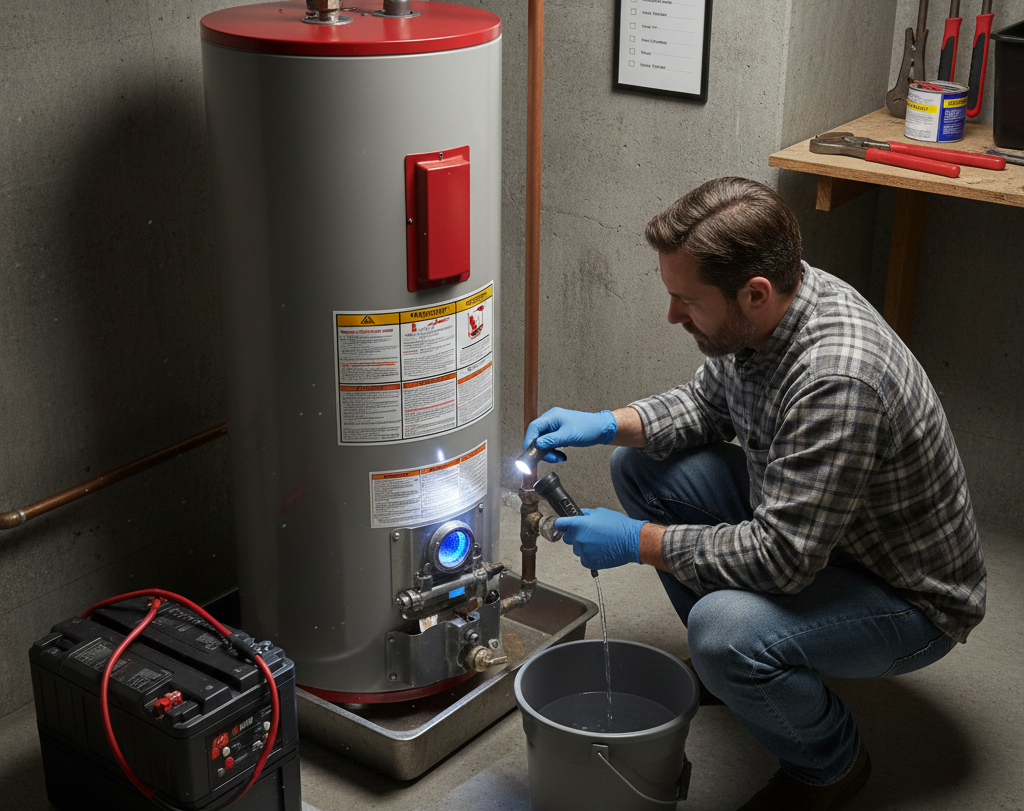
A warm bathe is some thing most humans take without any consideration until the water turns ice cold. Your water heater is one of the toughest-jogging home equipment in your house. It runs 24 hours a day to keep a ordinary supply of warmth water prepared to your own family. Because it’s miles frequently tucked away in a basement or closet, it is simple to overlook. However, appearing a regular water heater inspection can prevent surprising breakdowns and highly-priced water harm.
This article focuses on the bodily hardware and the control of domestic system upkeep. Please phrase that calltheplumb.Com offers academic records and does not host software program program application or provide direct plumbing services. This content cloth cloth is for informational capabilities to help you control your house plumbing tool competently and effectively.
Why You Should Check Your Water Heater
Most water heaters final among eight and 12 years. Without care, that lifespan can be an entire lot shorter. Rust, sediment buildup, and failing valves are not unusual issues that begin small but motive massive disasters. A leaky tank can spill dozens of gallons of water into your private home in minutes.
By checking the unit your self, you could spot signs and symptoms and signs and symptoms and symptoms and signs and symptoms of trouble earlier than they turn out to be emergencies. You moreover ensure the unit runs successfully. A smooth water heater makes use of less strength, which saves you cash for your monthly software program software bills.
The Value of Early Detection
Finding a small drip nowadays is an entire lot higher than locating a flood day after today. Many components of a water heater, much like the anode rod or the temperature-pressure treatment valve, are replaceable. Catching a element failure early approach you could restore the unit instead of changing the whole tank.
Tools Needed for a Basic Inspection
You do not want many specialized tools to appearance over your gadget. A few vital plumbing gadget and safety gadgets are generally enough.
- Flashlight: To see into darkish corners and under the tank.
- Bucket: To seize small quantities of water in a few unspecified time in the destiny of valve sorting out.
- Screwdriver: For doing away with get right of access to panels on electric powered powered fashions.
- Wrench: If you need to tighten a unfastened fitting.
- Towels: To wipe up small spills or moisture.
Step-through-Step Guide to a Water Heater Inspection
Follow this technique at least as soon as each six months. It is a smooth manner to live on pinnacle of your private home manipulate. For extra suggestions on organizing your maintenance duties, visit calltheplumb.Com.
1. Check the Area Around the Tank
The first step is seen. Look at the floor throughout the bottom of the heater. It have to be bone dry. If you spot puddles or damp spots, you have were given a leak. Also, make sure there are not any flammable objects, like fuel or paint thinners, saved near a gasoline water heater.
2. Inspect the Pipes and Connections
Look on the pinnacle of the tank wherein the bloodless water enters and the new water leaves. Look for “corrosion,” which looks as if white or green crusty buildup at the steel. This is an indication of a sluggish leak that is evaporating in advance than it hits the floor.
three. Test the T&P Relief Valve
The Temperature and Pressure (T&P) treatment valve is a safety tool. It opens if the tank receives too warm or has too much pressure. It normally has a small lever on the pinnacle or factor of the tank.
- The Test: Place a bucket below the release pipe. Lift the lever speedy and permit it skip. Water need to rush out after which stop simply even as you launch the lever. If it continues dripping, the valve desires to get replaced.
four. Look on the Pilot Light or Heating Elements
For gasoline warmers, leaf through the view port at the lowest. The flame must be a everyday blue. A yellow or orange flame way the burner is grimy and now not burning effectively. For electric heaters, pay hobby for a loud “scorching” sound, that may probably suggest sediment is covering the heating elements.
5. Check the Anode Rod
The anode rod is a “sacrificial” rod that hangs inside the tank. Its interest is to rust so the tank may not ought to. You generally find out the pinnacle of it at the very top of the tank. If the rod is simply eaten away, the tank will begin to rust next.
Comparison of Water Heater Types
| Feature | Standard Tank (Gas) | Standard Tank (Electric) | Tankless Heater |
| Energy Source | Natural Gas or Propane | Electricity | Gas or Electric |
| Expected Life | 8-12 Years | 10-15 Years | 20+ Years |
| Maintenance | High (Sediment/Vent) | Medium (Elements) | High (Flushing) |
| Common Issue | Pilot Light/Rust | Burned Elements | Scale Buildup |
Managing Sediment Buildup
Sediment is the primary enemy of water heaters. Most tap water includes minerals like calcium. When water is heated, those minerals settle at the bottom of the tank. This creates a thick layer of “crust.”
The Problems Caused through Sediment
- Noise: You can also pay attention popping or banging sounds as air bubbles explode through the sediment.
- Efficiency: The burner has to warmth the sediment earlier than it is able to warm temperature the water.
- Tank Damage: Sediment traps warm temperature closer to the bottom of the tank, that could motive the metallic to weaken and in the end leak.
How to Flush the Tank
To cast off sediment, you have to flush the tank as fast as a 12 months. Connect a lawn hose to the drain valve at the bottom. Run the hose to a ground drain or outdoor. Open the valve and permit the water run till it appears clean. This is a key part of an effective water heater inspection normal.
Pros and Cons of DIY Inspections
| Pros | Cons |
| Save Money: You don’t have to pay a pro for a simple check. | Risk of Burns: The water inside the tank is very hot. |
| Better Awareness: You learn how your home works. | Messy: Flushing a tank can result in spills. |
| Prevent Damage: Catch leaks before they ruin the floor. | Tool Cost: You may need to buy a few basic tools. |
Common Mistakes During Inspection
- Turning off the Water Only: If you drain the tank, you ought to flip off the power or gas first. If an electric powered element is on and now not covered with the aid of using manner of water, it’ll burn out in seconds.
- Ignoring the Discharge Pipe: The T&P valve need to have a pipe this is going inside the course of the floor. If it’s miles missing, a strain release want to spray boiling water throughout the room.
- Setting the Temp Too High: Your heater need to be set to a hundred twenty stages Fahrenheit. Anything better will boom the threat of scalding and reasons faster sediment buildup.
- Touching Electrical Parts: On electric fashions, in no way touch the wires in the lower back of the access panels besides the electricity is off on the breaker vicinity.
Best Practices for Long-Term Care
Professional home manipulate entails more than simply seeking out leaks. It is ready growing an surroundings in which your own home system can last. You can discover extra high-quality advice on device care at calltheplumb.Com.
Make effective you test for rust on the lowest of the tank the use of a mirror. It is likewise sensible to take a look at the valves each few months to ensure they’ll be now not seized by using minerals. Always near off the gas in case you scent a “rotten egg” odor close to the unit.
Knowing the way to use a plunger or the usage of a drain snake is important, but the ones equipment may not assist in case your water heater bursts. If you have got tough water, recollect installing a water softener. This will significantly lessen the amount of sediment that collects on your tank. Always take a look at the vent pipe on gas models to make sure it’s miles tightly related and no longer leaking carbon monoxide into your property.
Workflow: Responding to a Found Problem
| Problem Found | Immediate Action | Next Step |
| Active Leak | Turn off water and power/gas | Call a plumber or replace tank |
| Corroded Pipe | Tighten the fitting slightly | Apply plumber’s tape to threads |
| Dripping T&P Valve | Flush the valve to clear debris | Replace valve if drip continues |
| Yellow Flame | Turn off gas and brush the burner | Schedule professional cleaning |
| No Hot Water | Check the pilot light or breaker | Replace thermocouple or element |
FAQs
How often must I investigate my water heater?
You need to do a quick visible test every month. A greater wonderful inspection, which includes testing the protection valve, have to show up every six months.
Why is my water heater developing a popping noise?
This is form of constantly as a result of sediment buildup. The noise is steam bubbles escaping from underneath the layer of minerals at the lowest. Flushing the tank need to solve the hassle.
Can I update a heating element myself?
Yes, if you are snug with easy electric art work. You ought to turn off the breaker and drain the tank beneath the quantity of the detail in advance than you put off it.
What must I do if I see rust in my warm water?
This normally way the internal of the tank is beginning to corrode. Check your anode rod first. If the rod is super, the tank itself might be failing and will want to get replaced speedy.
Is a small drip from the T&P valve a big deal?
Yes. A drip manner the valve isn’t always sealing successfully. This may be a sign of volatile stress degrees or clearly a worn-out valve. Either manner, it goals hobby right away.
Should I wrap my water heater in an insulation blanket?
For older tanks in bloodless basements, this could keep power. However, for more current tanks with immoderate insulation rankings, it’s miles regularly not vital. Never cover the pinnacle or bottom of a fuel heater with a blanket.
How do I recognize if my water heater remains underneath warranty?
Look for the manufacturer’s label at the aspect of the tank. It can also moreover have the version amount and the date of manufacture. You can typically test the guarantee popularity at the manufacturer’s net internet site on-line.
Conclusion
Conducting a normal water heater inspection is one of the smartest topics a owner of a residence can do. It takes little or no time however gives huge rewards. By checking your connections, attempting out your protection valves, and coping with sediment, you can preserve your heat water flowing and your property stable.
Stay proactive in your own home control. Don’t appearance in advance to a cold shower to inform you some thing is inaccurate. Take a few minutes this weekend to look over your gadget. A nicely-maintained water heater is quieter, less steeply-priced to run, and masses lots a great deal less probably to cause a disaster. With the right know-how and some smooth tests, you could address this vital a part of domestic protection without problems.