
A rest room that might not prevent walking is a commonplace household headache. You pay interest that ordinary ghost flushing or a faint trickling sound in the direction of the night time. It appears like coins is truly sliding down the drain. While it can appear like a major plumbing catastrophe, a Running toilet fix is typically one of the simplest domestic protection you could perform your self. Most of the time, you simplest need a few minutes and 0 particular gear to remedy the problem.
Managing your house systems correctly calls for a fundamental expertise of the way they paintings. This manual specializes inside the equipment, manipulate of water levels, and easy hardware fixes that hold your rest room sensible. At calltheplumb.Com, we offer academic resources to help you control your home through higher expertise and upkeep software program application tracking. Please be conscious that we do now not host or offer bodily repair services or plumbing elements. We are right here that will help you understand the approach so that you can take control of your application payments.
By analyzing to diagnose the sound of jogging water, you can prevent waste and guard your own home from ability leaks. This article is written particularly for novices who want a clean, step-by using-step course to a quiet lavatory.
How a Toilet Tank Works
To repair the noise, you first want to recognise what’s going on within the tank. A rest room is a simple gravity-fed system. It has important dreams: filling the tank and releasing water into the bowl.
Inside the tank, there are three number one components you want to understand:
- The Fill Valve: This is the tall tower that brings water into the tank.
- The Flapper: This is the rubber seal at the bottom that opens while you flush.
- The Overflow Tube: This is an open pipe inside the middle. If the water gets too immoderate, it spills into this tube to save you a flood.
When your relaxation room keeps to run, it means water is both leaking past the flapper into the bowl or the fill valve is constantly looking for to top off a tank this is overflowing into the middle tube. Proper manage of those three parts will remedy 99% of all noise problems.
Benefits of Fixing a Running Toilet Immediately
Ignoring a minor leak can cause most important results. Managing your plumbing fitness is a critical part of assets ownership.
Lower Utility Bills
A strolling rest room can waste loads of gallons of water in step with day. Depending in your neighborhood water expenses, this can add fifty dollars or extra on your month-to-month bill. Performing a quick restore pays for itself nearly right away.
Prevent Silent Leaks
Sometimes a lavatory runs so quietly you do not word it. Over time, this constant glide can put on down the wax ring at the bottom of the bathroom. This leads to hidden leaks that rot your subfloor. By checking your tank frequently, you avoid highly-priced structural renovation later.
Peace of Mind
There is a mental advantage to a quiet domestic. That regular trickling sound is a stressor. Taking ten minutes to remedy the issue removes a every day annoyance from your lifestyles. You can find out greater facts on fixing a leaky tap or one-of-a-kind own family noises at calltheplumb.Com.
Tools and Parts for the Job
Most tank upkeep require very little machine. In fact, many humans entire the project with their bare palms. However, having a small manage package equipped is constantly an extremely good concept.
Basic Repair Kit
- Replacement Flapper: Most are not unusual, but some manufacturers need specific sizes.
- Adjustable Pliers: Useful in case you need to update the complete fill valve.
- Scissors: To trim the chain if it’s miles too lengthy.
- Towel: To dry your palms and capture small drips.
Comparison of Common Tank Parts
| Part Name | Primary Function | Lifespan | Difficulty to Replace |
| Rubber Flapper | Seals the flush hole | 3–5 Years | Very Easy |
| Fill Valve | Fills tank with water | 5–10 Years | Moderate |
| Tank Handle | Initiates the flush | 10+ Years | Easy |
| Float Ball/Cup | Tells fill valve to stop | 5–10 Years | Easy |
Before searching for components, you want to recognize which component is damaged. There are two most critical reasons a rest room runs.
The Dye Test
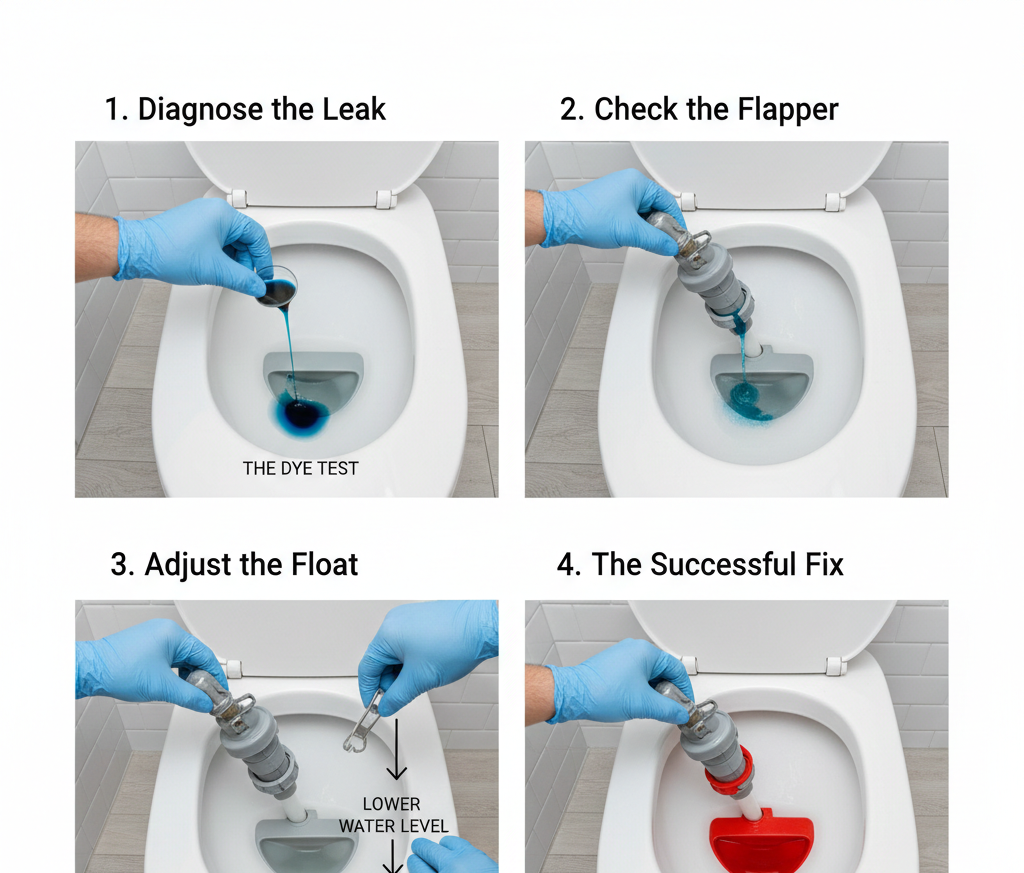
This is the outstanding way to check the flapper. Drop some drops of food coloring into the tank (no longer the bowl). Do not flush. Wait 15 minutes. If the water inside the bowl modifications coloration, your flapper is leaking. Water is escaping thru the lowest seal.
The Overflow Check
Look at the water degree in the tank. Is it spilling over the top of the open tube within the middle? If so, your water stage is ready too high or your fill valve is broken. The valve would not recognize at the same time as to close off, so it maintains pouring water into the overflow tube. This is a commonplace walking toilet repair that calls for a simple adjustment in preference to a modern day component.
Step 2: Fixing a Leaky Flapper
If your dye test confirmed color inside the bowl, the flapper is the offender. This is the most not unusual repair.
- Shut off the water: Turn the valve inside the lower back of the rest room clockwise.
- Flush the relaxation room: This empties the tank so that you can work.
- Inspect the chain: If the chain is simply too tight, it pulls the flapper up. If it’s far too loose, it receives stuck beneath the flapper. Adjust the clip so there may be only a tiny little bit of slack.
- Clean the seat: Sometimes slime builds up at the rim wherein the flapper sits. Wipe it smooth with a sponge.
- Replace the flapper: If the rubber feels slimy or has cracks, pull it off the pegs and snap a modern-day one into area. Turn the water lower back on and check it.
Step 3: Adjusting the Water Level
If water is pouring into the overflow tube, you want to decrease the waft. The float is the piece that rises with the water and shuts off the valve.
How to Adjust Different Floats
| Float Type | How to Adjust | Action |
| Float Ball (on a metal arm) | Turn the screw at the base | Bend arm down slightly |
| Float Cup (slides up the valve) | Squeeze the spring clip | Slide the cup down |
| Vertical Screw | Use a screwdriver | Turn counter-clockwise |
The reason is to have the water diploma sit down about one inch beneath the top of the overflow tube. This control of the water line guarantees the tank remains full sufficient for a robust flush but low sufficient to stop strolling. For greater superior recommendations on dealing with your house’s water pressure, go to calltheplumb.Com.
Replacing the Fill Valve
If you’ve got adjusted the go together with the float and the water nevertheless might not stop, the inner seal of the fill valve is probably useless. This calls for a bit greater work however is still a newbie-diploma mission.
- Empty the tank: Shut off the water and flush. Use a sponge to take in the final little bit of water at the bottom.
- Disconnect the deliver line: Use your pliers to unscrew the hose at the bottom of the tank. Have a towel prepared for the small amount of water left within the line.
- Remove the vintage valve: Unscrew the plastic nut beneath the tank. Pull the antique tower out.
- Install the new valve: Place the present day valve within the hollow. Tighten the nut beneath via hand, then a quarter-flip with pliers. Do not over-tighten, or you might crack the tank.
- Reconnect and test: Hook the deliver line back up, turn on the water, and watch the tank fill.
Pros and Cons of DIY Tank Repair
Deciding whether or not or now not to deal with this your self or call a pro depends in your comfort stage.
Advantages and Disadvantages
| Pros | Cons |
| Saves $100+ in labor fees | Requires getting your hands wet |
| Can be done at any time of day | Potential for a small floor mess |
| No waiting for a technician | Learning curve for specific parts |
| Extends the life of your toilet | Requires a trip to the hardware store |
Even a smooth on foot toilet repair can bypass incorrect in case you rush. Keep those management guidelines in mind.
Over-Tightening Bolts
The tank is made of porcelain, which is largely glass. If you operate a wrench to crank down at the plastic nuts, you could effortlessly crack the tank. Hand-tight is generally sufficient for max internal factors.
Leaving the Chain Too Long
A prolonged chain can get trapped under the flapper because it closes. This creates a tiny hole that we ought to water leak via. Always trim the extra chain after you have got found the appropriate duration.
Using In-Tank Cleaners
Those blue or bleach capsules that sit inside the tank are very hard on rubber. They purpose flappers to rot and deform a whole lot faster than everyday. If you want to maintain your bowl easy, use a clip-on purifier that sits in the bowl as an opportunity.
Not Checking the Refill Tube
There is a small bendy tube that is going from the fill valve into the overflow pipe. If this tube is driven too deep into the pipe, it may genuinely “siphon” water out of the tank and cause the relaxation room to run. Make fine it’s miles clipped to the top of the pipe, not shoved down internal it.
Workflow: Systematic Tank Maintenance
| Step | Task | Frequency |
| 1 | Visual Inspection | Every 3 Months |
| 2 | Dye Test for Leaks | Once a Year |
| 3 | Clean the Flapper Seat | Every 6 Months |
| 4 | Check Water Level Height | After any repair |
| 5 | Replace Rubber Parts | Every 4–5 Years |
Most tank troubles are DIY-pleasant. However, some troubles suggest a deeper management failure that requires specialized gear.
Leaks at the Base
If you spot water on the ground round the lowest of the bathroom, it isn’t a tank trouble. The wax ring has in all likelihood failed. Replacing a wax ring requires lifting the complete heavy lavatory off the floor. If you are not snug with heavy lifting, that is the time to call a pro.
Cracked Porcelain
If you notice a hairline crack in the tank or the bowl, do now not try to glue it. Porcelain cracks can develop unexpectedly and cause a huge flood. A cracked bathroom should be replaced right now.
Clogs That Won’t Quit
If your lavatory runs after which overflows because of a clog, you may want to discover ways to plunge a rest room efficiently. If plunging fails, you might have a main line issue. You can use assets control software program to song how frequently clogs arise to see if you have a regular pipe problem. Visit calltheplumb.Com for educational belongings on identifying most important line troubles.
FAQs Section
Why does my rest room flush with the resource of itself?
This is called a “ghost flush.” It happens because the water stage within the tank has dropped low enough to cause the fill valve. Since no person driven the deal with, the only manner the water can also need to have left is thru a leaky flapper. Replace the flapper to prevent the ghost flushes.
Is the water in the tank smooth?
Yes. The water inside the tank is the identical sparkling water that comes out of your sink. It hasn’t been used yet. While it is not for consuming, it is flawlessly safe to the touch at the same time as you are making repairs.
Why is my fill valve making a immoderate-pitched whistling sound?
Whistling is usually due to a partially blocked valve or a vibrating inner diaphragm. You can on occasion take the top off the fill valve and flush out debris, but usually, it’s miles less difficult to simply update the whole valve.
How a bargain water does a strolling bathroom clearly waste?
A moderate leak can waste about 200 gallons a day. A extreme leak, in which the water is going for walks at complete pressure into the overflow tube, can waste over 1,000 gallons in 24 hours. This can double or triple your water bill in a single month.
Can I recuperation a flapper with Vaseline?
Some humans positioned petroleum jelly on a leaky flapper to help it seal. This is a horrific idea. Petroleum merchandise degrade rubber. It may stop the leak for an hour, but it will ruin the flapper and make the problem worse very quickly.
What if my near-off valve is stuck?
If the valve within the returned of the bathroom won’t flip, do no longer strain it with a wrench. You would in all likelihood snap the pipe in the wall. Instead, turn off the main water valve on your entire house earlier than attempting your walking lavatory restoration.
Why is the tank taking goodbye to fill?
This is regularly due to a partially closed near-off valve or a clogged fill valve. Make sure the valve at the wall is opened all of the way. If it’s miles, the fill valve likely has mineral buildup internal and wants to be replaced.
Conclusion
A on foot rest room is a nuisance that is without problem conquered with a piece little bit of information and a couple of minutes of it slow. By understanding how the flapper, fill valve, and overflow tube artwork collectively, you may diagnose the trouble without stress. Most upkeep contain clean changes or much less expensive rubber parts that everybody can install.
Successful home management is set being proactive and staying knowledgeable. Keeping your plumbing in pinnacle form prevents waste and saves you cash for the topics that count number. For extra assist with home upkeep monitoring and educational plumbing courses, visit calltheplumb.Com. Whether you’re managing a leaky faucet or a loud lavatory, you have got got the electricity to keep your property walking smoothly.