
Dealing with a clogged bathroom fixture is a worrying experience for any property owner. The instantaneous fear of an overflow can cause panic, however understanding a way to plunge a toilet effectively can solve the problem in seconds. Most humans grasp a plunger and start pumping frantically, which regularly ends in a larger mess and a failed repair. By information the physics of suction and using the proper system, you could manage this commonplace family hassle like a seasoned.
Proper domestic management includes greater than simply solving things once they destroy; it’s miles about the use of the right equipment and strategies to maintain a functional living space. This guide presents academic information regarding the tools and management strategies utilized in simple plumbing renovation. At calltheplumb.Com, we specialize in presenting insights into renovation software program and educational resources for house owners. Please be conscious that we do now not host or offer physical plumbing services or unique hardware merchandise.
Learning the right technique guarantees that you shield your flooring and your pipes. This article will spoil down the complete process into simple, viable steps for novices.
Why Understanding Your Plunger Matters
Not all plungers are built for the same task. Using a flat sink plunger on a curved toilet bowl is the number one motive why human beings fail to clean a clog. To succeed, you have to create an airtight seal. Without that seal, the air and water escape across the aspects, leaving the blockage precisely in which it is.
When you manage your property’s tool kit, you have to make sure you have got a devoted flange plunger. This particular device has a rubber flap that attracts out from the middle. This flap suits flawlessly into the hole at the bottom of the rest room. This design lets in you to move water from side to side with maximum pressure.
Understanding the internal mechanics of your plumbing helps you understand that the plunger is not simply pushing the clog down. It is clearly vibrating the clog from side to side until it breaks apart. This “push and pull” movement is the secret to a clean drain.
Choosing the Right Tool for the Job
Before you begin working, you need to affirm you have the ideal equipment. Managing your plumbing successfully requires the right hardware for the specific fixture.
Plunger Type Comparison
| Plunger Type | Best Used For | Design Feature | Effectiveness on Toilets |
| Cup Plunger | Flat Sinks / Tubs | Flat rubber bottom | Very Low |
| Flange Plunger | Toilets | Pull-out rubber flap | High |
| Accordion Plunger | Stubborn Clogs | Plastic tiered bellows | High (but can scratch) |
| Power Plunger | Heavy Duty | Internal pump mechanism | Moderate |
For most families, a heavy-obligation rubber flange plunger is the nice average preference. It is flexible sufficient to healthy numerous bowl shapes and sturdy enough to last for decades. You can discover greater tips on building a proper domestic device package at calltheplumb.Com.
Preparation: Avoiding the Overflow
The biggest mistake people make is trying to plunge a lavatory even as the water continues to be growing. If you see the water stage climbing toward the rim, you should act rapid to stop the go with the flow before you even touch a device.
Stop the Water Flow
Reach behind the bathroom and find the silver valve at the wall. Turn it clockwise till it stops. This shuts off the water supply to the tank. If the valve is stuck, put off the lid of the tank and push the rubber flapper down to seal the hollow. This will stop water from getting into the bowl straight away.
Check the Water Level
You want enough water in the bowl to cowl the top of the plunger. If the bowl is empty, the plunger will simply pass air. Air compresses, which makes it vain for clearing clogs. If the bowl is just too complete, use a small bucket to cast off some water so that you do not splash anywhere.
Protect the Area
Lay down a few antique towels or newspaper across the base of the fixture. Even with a terrific technique, a bit splashing is common. This control step prevents water damage to your subfloor and makes cleanup a good deal easier.
Step-by-Step Guide to Plunge a Toilet
Once the location is ready, follow those steps to clean the blockage accurately and successfully.
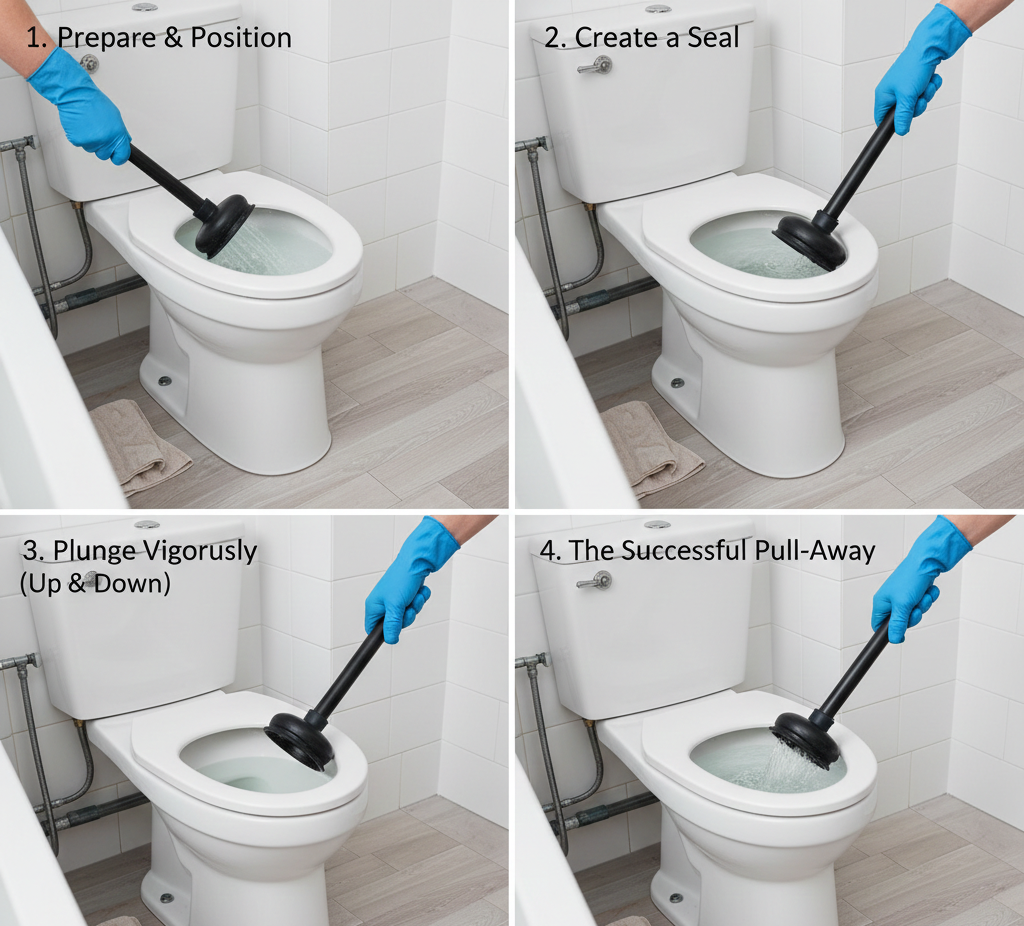
Step 1: Warm Up the Plunger
Rubber can become stiff, specifically if it’s miles stored in a chilly garage or basement. Run the top of the plunger underneath warm water for a minute. This softens the rubber, allowing it to shape a much better seal against the porcelain.
Step 2: The Angle of Attack
Lower the plunger into the bowl at an perspective. This lets in the cup to fill with water in place of air. Once the cup is full of water, middle it over the drain hollow. Make sure the flange (the greater flap) is tucked into the opening.
Step three: The First Push
Start with a mild push. This seals the plunger in opposition to the hollow and pushes out any closing air. If you push too tough initially, you will probable spoil the seal and spray water returned at yourself.
Step 4: The Main Action
Once you have a organization seal, use a lively “up and down” movement. Keep the plunger perpendicular to the ground. You ought to sense the resistance of the water. Do this approximately 10 to fifteen instances with out breaking the seal.
Step 5: The Pull-Away
After a chain of pulses, pull the plunger up fast. This creates a vacuum effect that often pulls the clog upward and breaks it aside. If the water rushes down the drain, you have got succeeded.
Workflow for Persistent Clogs
If the primary attempt would not paintings, do not surrender. Some clogs require a systematic method to clean.
| Action Level | Tool/Method | Goal |
| Level 1 | Flange Plunger | Clear standard organic blocks. |
| Level 2 | Hot Water & Dish Soap | Lubricate and break down grease. |
| Level 3 | Baking Soda & Vinegar | Use a natural fizz to loosen the mass. |
| Level 4 | Toilet Auger | Physically hook and pull out the object. |
If you attain Level 4, you are shifting past simple plunging. A toilet auger is a control tool that uses a cable to reach deep into the “S-entice” of the toilet. This is perfect for clogs because of toys or large quantities of paper.
Pros and Cons of Different Methods
While plunging is the same old, there are other ways to manipulate a clog. Knowing the pros and cons facilitates you decide when to exchange techniques.
Comparison of Clearing Methods
| Method | Pros | Cons |
| Plunging | Fast, cheap, safe for pipes | Requires physical strength |
| Chemical Cleaners | No effort required | Can damage pipes and environment |
| Enzyme Cleaners | Very safe, kills odors | Takes hours or days to work |
| Toilet Auger | Clears almost anything | Can scratch the porcelain finish |
At calltheplumb.Com, we normally recommend mechanical strategies (like plungers) over chemical ones. Mechanical equipment deal with the foundation of the hassle with out introducing hazardous materials into your house’s drainage system.
Common Mistakes to Avoid
Managing your own plumbing is worthwhile, however small errors can lead to highly-priced upkeep. Avoid those commonplace plunging pitfalls.
Using a Sink Plunger
As noted earlier than, the flat cup of a sink plunger can’t create a seal in a toilet. You will spend hours pumping with no end result. Ensure your management package has an appropriate flange style.
Pumping at an Angle
If the take care of of the plunger is tilted, the seal will break. You should push immediately down. If the bowl form makes this tough, try to find a plunger with a greater flexible neck.
Not Using Enough Water
If the plunger isn’t always submerged, you are just moving air. Air is “squishy” and might not positioned enough pressure on the clog. Always ensure the rubber head is absolutely underwater.
Forgetting the “Pull”
The upward stroke is just as vital because the downward stroke. The suction created whilst you pull again frequently does extra paintings to loosen the clog than the strain of pushing down.
When Plunging Isn’t Enough
Sometimes, regardless of how properly you plunge a lavatory, the water might not pass down. This generally shows a extra serious control problem to your plumbing gadget.
Hard Object Obstructions
If a infant has dropped a toy, a toothbrush, or a comb into the rest room, a plunger will in all likelihood not paintings. In reality, plunging would possibly push the item deeper into the pipes. In these cases, you want a lavatory auger or a wet/dry vacuum to extract the item.
Main Line Blockages
If you be aware that plunging the bathroom reasons water to bubble up in your bathe or bath, you have got a first-rate line clog. This is a situation that requires a more advanced control approach. You might need to check your cleanout valve or use software tools to discover a nearby expert who has a sewer digicam.
Recurring Clogs
If the same rest room clogs each week, the problem isn’t always the paper—it’s the pipe. You would possibly have a “burr” in the pipe catching particles, or an antique lavatory with a vulnerable flush. Tracking these recurring issues in a domestic preservation log can assist you decide whilst it’s time to replace the fixture absolutely. You can analyze greater approximately unclogging a drain evidently or handling your furnishings on calltheplumb.Com.
Best Practices for Prevention
The fine way to control a toilet is to make certain you by no means should plunge it. Educating anyone in the household on right use is the first step in preventative control.
- The “One-Flush” Rule: Only flush human waste and rest room paper. Never flush “flushable” wipes, paper towels, or feminine merchandise. These do now not break down and are the leading motive of clogs.
- Keep the Rim Holes Clean: Water enters the bowl thru small holes under the rim. If those get clogged with minerals, the flush loses its strength. Clean them with a small brush and vinegar.
- Regular Tank Inspection: Ensure the water degree in the tank is on the encouraged mark. A low water stage results in a weak flush, which can’t flow waste via the lure.
- Educational Management: Teach kids early approximately what can and can’t pass into the toilet. Most family clogs are preventable with easy schooling.
Frequently Asked Questions
Can I use dish cleaning soap to help a clog?
Yes. Pouring half of a cup of liquid dish soap into the bowl and letting it sit for 20 mins can lubricate the pipes and the clog. Follow this with a bucket of warm (not boiling) water. This frequently makes plunging a whole lot greater powerful.
Is it secure to apply a plunger with chemical cleaners?
No. This may be very dangerous. If you have got already poured a caustic chemical cleanser into the toilet, do now not plunge. The splashing water can motive extreme chemical burns to your skin and eyes. Always try plunging first earlier than considering any liquid answers.
Why does my plunger flip inner out?
This normally occurs with cheap, skinny rubber plungers. It way you are making use of a whole lot of pressure however the cloth isn’t always robust sufficient to maintain its form. A heavy-obligation rubber plunger will face up to flipping and provide greater strength.
How do I smooth a plunger after use?
Rinse the plunger within the lavatory bowl whilst flushing numerous times. To disinfect it, you can dip it in a bucket of water combined with a small amount of bleach or a sturdy family purifier. Always permit it air dry earlier than storing it.
My bathroom bubbles once I’m not using it. What does that mean?
This usually suggests a venting problem. Your plumbing desires air to drift successfully. If the vent pipe in your roof is clogged with leaves or a chook’s nest, air gets trapped and bubbles up through the bathroom. This is a control problem that typically calls for looking at the roof vents.
Can boiling water crack a lavatory?
Yes. Porcelain is touchy to high temperature adjustments. Pouring boiling water into a chilly rest room bowl can reason the porcelain to crack immediately. Always use hot tap water, however in no way boiling water.
What is a “closet auger”?
This is any other call for a bathroom auger. It is a specific tool designed to clean toilets without scratching the bowl. It is a essential part of any superior domestic management tool package.
Conclusion
Mastering the ability to plunge a rest room is a essential skill for any home owner. It transforms a capability disaster right into a minor 5-minute venture. By selecting the proper flange plunger, ensuring a right water seal, and the use of a steady “push and pull” motion, you could clear up the majority of bathroom clogs without calling for expert assist.
Effective domestic care is built on a foundation of training and the right tools. Using digital control strategies to maintain tune of your private home’s preservation wishes can save you these problems from becoming chronic. For extra academic courses on gear, maintenance software program, and plumbing techniques, visit calltheplumb.Com. With a bit practice and the proper method, you could keep a clean and functional plumbing machine for years to come.