
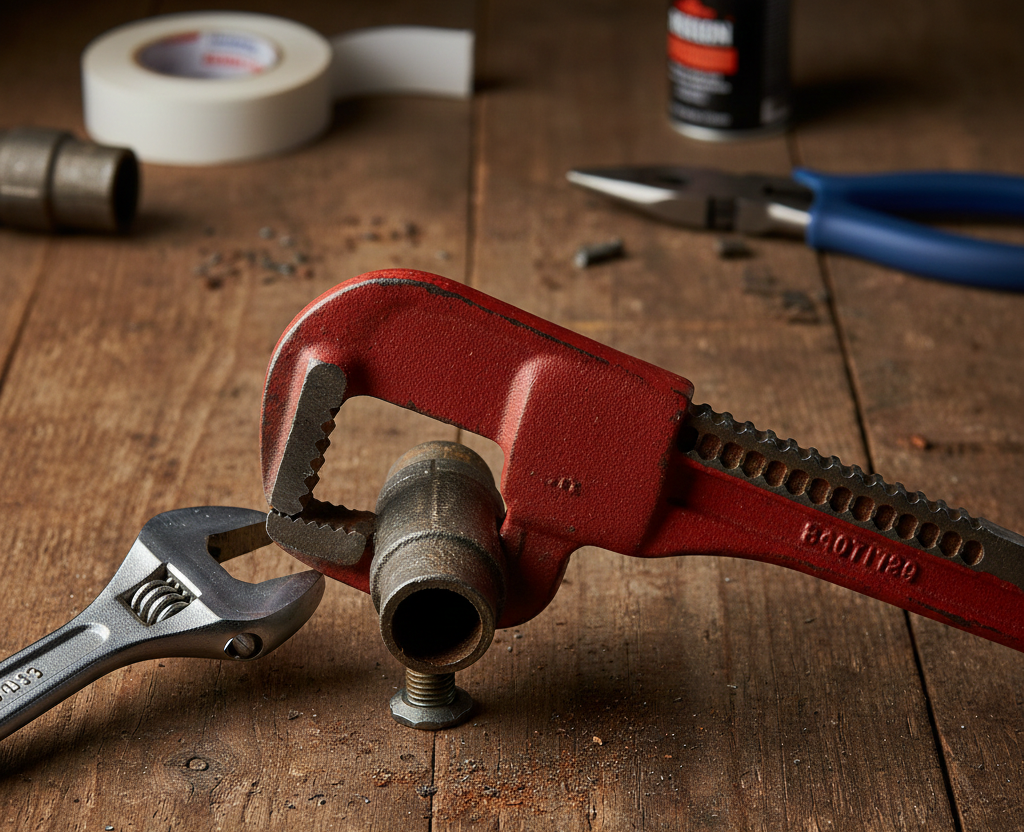
The sight of a huge, heavy purple device in a toolbox typically identifies the pipe wrench. For many owners, this tool seems intimidating. It is heavy, has sharp metallic tooth, and appears built for business art work. However, know-how the fundamentals of pipe wrench use is critical for each person who desires to handle their personal domestic maintenance. It is the best device designed in particular to grip and turn rounded metallic devices that don’t have any flat aspects.
This article specializes inside the physical hardware and the management of plumbing restore duties. Please be conscious that calltheplumb.Com gives instructional facts and does no longer host software program or provide direct plumbing services. This content cloth is for informational functions that will help you control your private home plumbing device thoroughly and correctly.
Defining the Pipe Wrench
A pipe wrench is an adjustable wrench used for turning gentle iron pipes and fittings with a rounded ground. Unlike a preferred wrench that suits over a hex-shaped nut, this device is built to “bite” into the steel. It skills serrated jaws that tighten as you look at strain to the cope with.
The design is unique because of the reality the pinnacle jaw, called the hook jaw, is slightly loose. This intentional “play” allows the tool to behave as a ratchet. When you pull the take care of, the jaws lock tight. When you thrust back, the jaws release their grip, permitting you to reset the device with out taking it off the pipe.
The Anatomy of the Tool
- The Handle: Usually product of heavy cast iron or light-weight aluminum.
- The Heel Jaw: The fixed backside part of the gripping ground.
- The Hook Jaw: The adjustable pinnacle factor that movements up and down.
- The Adjustment Nut: A knurled ring that you spin to exchange the scale of the hole.
When is Pipe Wrench Use Necessary?
You do no longer need this device for every mission. In truth, the usage of it at the wrong time can destroy your furnishings. You have to reach for this heavy-responsibility device whilst you are running with threaded pipes which have a round profile.
Working with Iron and Steel
If you have got were given an older domestic, you probably have galvanized iron or black metallic pipes. These are common in gas lines and older water mains. Because these pipes are spherical and genuinely hard, a ultra-modern pair of pliers will virtually slip off. The hardened metal enamel of the pipe wrench dig into the surface to provide a slip-loose grip.
Dealing with Rusted Connections
In damp basements or pass slowly spaces, metallic pipes often rust collectively. This creates a bond that is almost impossible to break with hand power on my own. The lengthy contend with of the wrench presents the leverage needed to break these cussed seals.
Large Diameter Fittings
Most own family wrenches best open an inch or . A big pipe wrench can deal with a whole lot wider diameters. This makes it the pass-to choice for predominant shut-off valves and huge drain couplings.
Comparing Different Wrench Types
It is simple to get careworn on the hardware keep. Not all wrenches are constructed for the identical assignment. Using the incorrect one is a common mistake in home protection.
Wrench Comparison Table
| Tool Name | Jaw Type | Primary Purpose | Material Target |
| Pipe Wrench | Serrated (Teeth) | Turning round pipes | Iron, Steel, Copper |
| Adjustable Wrench | Smooth | Turning hex nuts | Steel, Brass |
| Basin Wrench | Swiveling Serrated | Reaching sink nuts | Plastic, Brass |
| Strap Wrench | Rubber/Cloth Strap | Decorative fixtures | Chrome, Polished Brass |
How to Use a Pipe Wrench Correctly
Using this device calls for more than virtually uncooked electricity. It calls for proper positioning. If you vicinity the jaws incorrectly, you can either slip or overwhelm the pipe. For extra steerage on organizing your plumbing projects, visit calltheplumb.Com.
Step 1: Clean the Pipe
Wipe away any grease, oil, or free rust from the pipe floor. While the tooth are designed to bite, excessive oil can cause the tool to slip, which can also bring about harm.
Step 2: Set the Opening
Spin the adjustment nut so the jaws are slightly wider than the pipe. Slide the tool onto the pipe. You want the pipe to be focused in the middle of the jaws, not touching the very once more of the “throat.”
Step three: Check the Direction
The tool simplest grips in a single path. The starting of the jaws need to face the route you need to show. If you want to show the pipe clockwise, the opening of the “C” form need to stand the right.
Step 4: Establish the Bite
Pull the address gently to ensure the teeth have gripped the metallic. You should see the hook jaw float barely and lock into location. Once it’s miles corporation, you may study more strain.
Step 5: Use a Second Wrench (The Backup)
This is a expert thriller. Always use two wrenches while running on a joint. Use one to show the pleasant and the opposite to maintain the pipe though. This prevents you from twisting and breaking the pipes similarly down the road.
Workflow: Replacing a Segment of Threaded Pipe
| Phase | Action | Tool Needed |
| Access | Clear the area and shut off water | Flashlight |
| Stabilize | Place the first wrench on the main pipe | Pipe Wrench |
| Loosen | Place the second wrench on the coupling | Pipe Wrench |
| Remove | Turn counter-clockwise to unscrew | Manual Effort |
| Prep | Clean threads and apply sealant | Plumber’s tape |
| Install | Screw in new segment by hand first | Manual Effort |
| Tighten | Use wrenches for the final quarter turn | Pipe Wrench |
Pros and Cons of the Pipe Wrench
| Pros | Cons |
| Unbeatable Grip: The teeth ensure the tool never slips on round surfaces. | Surface Damage: The teeth will leave permanent marks and scratches. |
| High Leverage: Long handles make it easy to turn stuck or rusted parts. | Heavy Weight: Can be tiring to use in overhead positions. |
| Durability: Built to last for generations with almost no maintenance. | Bulkiness: Too large to fit into tight spaces under sinks. |
| Versatility: Can be used on various pipe materials and sizes. | Single Direction: Must be flipped over to change the direction of turn. |
Common Mistakes to Avoid
Even pro DIYers once in a while make errors on the subject of pipe wrench use. Avoiding those mistakes will guard your own home and your tools.
- Using it on Chrome: Never use a pipe wrench on your bathe head or sink faucet. The enamel will shred the stunning finish. For these jobs, use a wrench with clean jaws.
- Using a “Cheater Bar”: Some humans slide a long pipe over the cope with to get more leverage. This can snap the wrench or reason the pipe to disintegrate. If it may not circulate, use penetrating oil as an alternative.
- Working on Plastic: While it can grip PVC, it’s miles very easy to crack plastic pipes with the pressure of an iron wrench. Use a strap wrench for plastic whenever viable.
- Placing the Pipe within the Back of the Jaws: If the pipe is touching the lower back of the wrench, it could not grip well. Leave a small hollow (approximately a 1/2-inch) among the pipe and the once more of the device.
- Pulling Toward Your Face: Always try and push the wrench faraway from your body or pull it in a manner that if it slips, you may not hit your self. These gear are heavy and may motive large bruising.
Best Practices for Tool Management
Owning tools is handiest 1/2 the conflict. You want to control them effectively to make certain they are prepared for an emergency. According to calltheplumb.Com, a nicely-maintained device package deal is the great safety towards water harm.
Always wipe the tooth after use. Bits of metal and rust can get caught inside the serrations. If the tooth are clogged, the device will slip. Use a cord brush to maintain the jaws smooth. It is likewise clever to observe a slight oil to the adjustment nut. This prevents the threads from rusting, which can make the device impossible to adjust.
When you end a interest, check for leaks immediately. The heavy vibration and strain of a pipe wrench can sometimes reason a nearby joint to loosen. Always confirm the pipe material earlier than you start. If you’re operating on copper, be very mild, as copper is a soft metallic that can be effects overwhelmed.
Frequently Asked Questions
Why are most pipe wrenches purple?
The colourful crimson shade is a lifestyle commenced via the Ridgid device organisation. It makes the tool clean to find out in a darkish pass slowly location or a messy toolbox. Today, many producers use red to suggest a heavy-responsibility professional grade.
Can I use a pipe wrench to take off a garden hose?
You can, however it is usually overkill. A pair of pliers is normally sufficient. If the hose is surely caught, a pipe wrench will work, but be careful not to crush the thin brass fitting at the hose.
What duration pipe wrench want to I purchase first?
For most house owners, a 14-inch wrench is the satisfactory all-round duration. It is small sufficient to in shape below maximum sinks however huge enough to cope with a water heater or a primary line.
Is an aluminum wrench as robust as iron?
Yes, great aluminum wrenches are absolutely as sturdy as cast iron ones. The predominant benefit is that they’ll be plenty lighter, which makes them much less complicated to use for lengthy durations. They are, however, greater high priced.
My wrench might not stop slipping. What is inaccurate?
The enamel might be worn down or clogged with particles. Use a twine brush to clean the jaws. If the enamel are rounded off from years of use, you may need to replace the hook and heel jaws.
Should I flip the pipe toward the jaw starting?
Yes. The open thing of the “hook” want to stand the direction you want to show. This lets in the tool to certainly tighten its grip as you pull the address.
Conclusion
Understanding the fundamentals of pipe wrench use is a vital skill for domestic upkeep. This tool is the workhorse of the plumbing international. It offers the grip and leverage needed to manipulate heavy-metal pipes and rusted fittings. While it is too competitive for decorative furniture, it’s far the only device that may handle the “heavy lifting” of a plumbing tool.
By choosing the proper length, positioning the jaws correctly, and preserving the tool over time, you could deal with most important upkeep with self warranty. Remember to typically paintings appropriately, use a backup wrench to stabilize your pipes, and preserve your gadget clean. With these practices, you could manage your own home upkeep like a expert.